Umwelt | Naturschutz, 18.01.2019
Indonesian road-building spree among ‘world’s scariest’ environmental threats
Planned roads and railways will shred much of what remeins
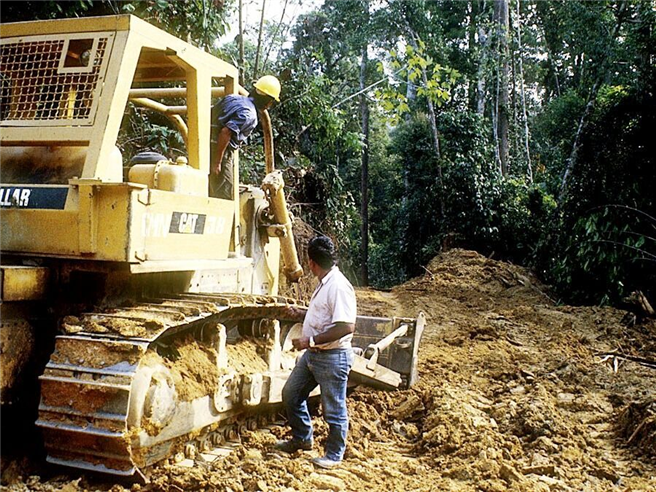
An ambitious road-building spree by the Indonesian government will fragment and destroy vast areas of
tropical rainforests on the island of Borneo, according to an international research team.
 "You’d be hard-pressed to identify a scarier threat to biodiversity anywhere on Earth,” said Dr
Mohammed Alamgir from James Cook University in Australia, lead author of the study.
"You’d be hard-pressed to identify a scarier threat to biodiversity anywhere on Earth,” said Dr
Mohammed Alamgir from James Cook University in Australia, lead author of the study."Borneo’s forests and rare wildlife have already been hit hard, but planned roads and railways will shred
much of what remains, slicing across the largest remaining forest blocks,” said Professor Jatna Supriatna
of the University of Indonesia.
 The authors say their results are especially worrisome because Indonesian Borneo is one of the world’s
largest tracts of native tropical forest, currently spanning 37 million hectares (93 million acres).
The authors say their results are especially worrisome because Indonesian Borneo is one of the world’s
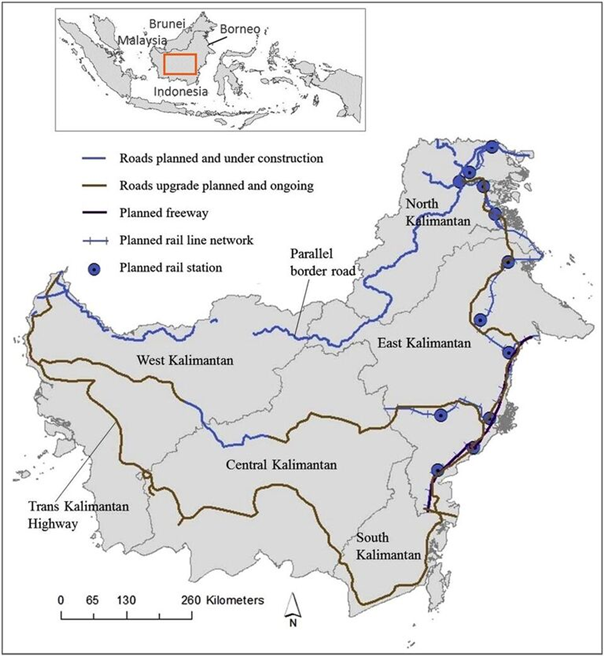
largest tracts of native tropical forest, currently spanning 37 million hectares (93 million acres). The roads are part of an ambitious plan by the Indonesian government to expand infrastructure such as
roads and railways in order to accelerate logging, mining, oil palm plantations and other forms of
development in Borneo.
"For wide-ranging species such as an elephant or orangutan, this is the worst possible news,” said
Professor William Laurance from James Cook University, leader of the research team. "To find food and
shelter, these species have to move to survive.”
 Professor Laurance and his colleagues used satellite images and computer models to estimate the
impacts of the road and rail network across Indonesian Borneo, a region known as Kalimantan. Their
research was published in the journal Scientific Reports.
Professor Laurance and his colleagues used satellite images and computer models to estimate the
impacts of the road and rail network across Indonesian Borneo, a region known as Kalimantan. Their
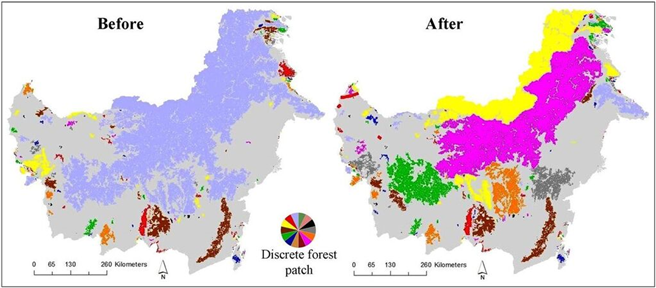
research was published in the journal Scientific Reports.They found the roads would reduce "forest connectivity”—the degree to which forest cover is spatially
linked together — sharply, by 34 percent in total.
"That’s an alarming figure,” said Dr Alamgir. "And it’s just the tip of the iceberg, because the new roads
and rail projects will open up the forest like a flayed fish, allowing illegal colonists, poachers and miners
to invade the forest and cause even more forest disruption.”
The scientists said that in addition, the new projects will slice through 42 national parks and protected
areas, making them far more vulnerable to illegal poachers. Some parks in Borneo are already devoid of
wildlife because of severe poaching.
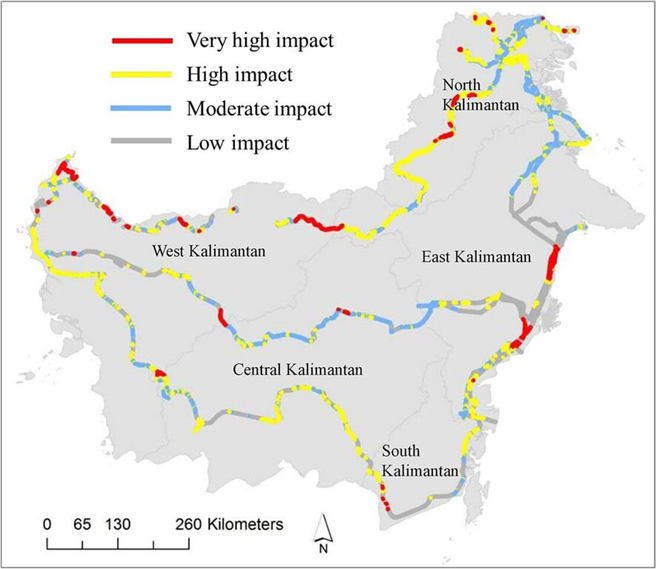
"We’ve identified the worst projects in terms of disrupting forests,” said Professor Laurance. "They
include border roads in the provinces of West, East and North Kalimantan, new Trans-Kalimantan roads,
and freeways and rail lines in East Kalimantan.”
"These projects will be like daggers in the heart of the Borneo rainforest,” said Dr Alamgir. "We implore
the Indonesian government to reconsider them, because they’ll open a Pandora’s box of crises for the
world’s biologically richest forests.”
Contact: Distinguished Professor William Laurance, Centre for Tropical Environmental and Sustainability Science
James Cook University | bill.laurance@jcu.edu.au


Die Natur lebt vom Kreislauf – und wir?
forum 04/2026
- Kreislaufwirtschaft
- Biodiversität
- Bildung
- Wasserweisheiten
- Altöl im Kreislauf
Kaufen...
Abonnieren...
08
OKT
2026
OKT
2026
forumESGready - Fortsetzung unserer beliebten Online-Events ab 8. Oktober
Transformation im Mittelstand: Aktuelle relevante Themen in drei Terminen
Online
Transformation im Mittelstand: Aktuelle relevante Themen in drei Terminen
Online
20
OKT
2026
OKT
2026
Personalmesse München powered by Zukunft Personal
Die Messe für Recruiting, Personalmanagement, BGM und Weiterbildung
80939 München
Die Messe für Recruiting, Personalmanagement, BGM und Weiterbildung
80939 München
23
NOV
2026
NOV
2026
European Sustainability Week
Built on Trust. Driven by Insight. Focused on Impact. - Ticketrabatt für forum-Leser*innen
53639 Königswinter
Built on Trust. Driven by Insight. Focused on Impact. - Ticketrabatt für forum-Leser*innen
53639 Königswinter


Anzeige

Der Mittelstand im ESG-Dschungel. Sie müssen nicht alles machen. Sie müssen nur wissen, was.
Sie erhalten einen klaren Fahrplan: was jetzt zu tun ist, was Sie auf dem Schirm behalten sollten und was Sie getrost ignorieren können.
Digitalisierung
 Macht KI dumm?
Christoph Quarch plädiert dafür, Sinnverstehen und Urteilskraft zu kultivieren als Gegengewicht gegen die drohende Übermacht der KI

Jetzt auf forum:
Es brennt! Doch kaum regnet es, ist alles vergessen …
Wie smarte Technologie Würde und Sicherheit im Alter sichert
LEEF wird fürs Nachhaltigkeitsmanagement ausgezeichnet
Konkrete Gefahren für Betriebe
Nachhaltigkeit beginnt mit gutem Design
Bereits über 70 Veranstaltungen für Munich Climate Week 2026 angekündigt