Umwelt | Klima, 14.06.2024
A Glimmer of Hope and the Race Against Time
Witnessing Food Systems Progress at SB60
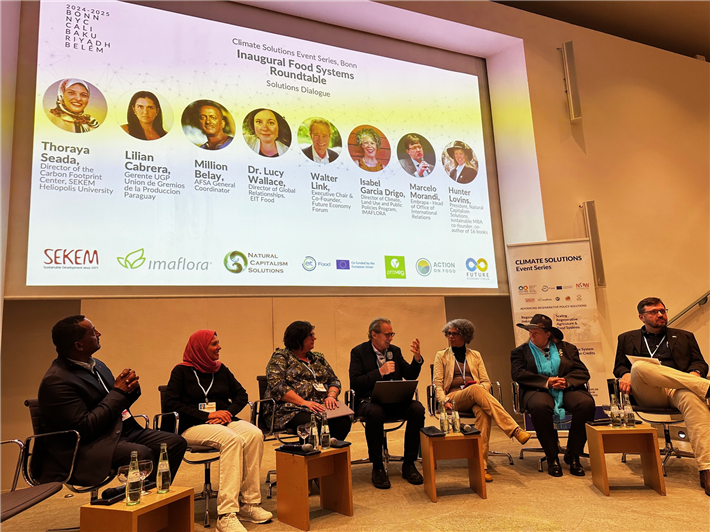
The sense of excitement wisped across the 60th meeting of the Subsidiary bodies to the UN Framework Convention on Climate Change (SB60) in Bonn. After days of negotiations, a sense of accomplishment flickered amongst the delegates. Parties to the UNFCCC agreed that food systems are a critical piece of the puzzle for tackling the ever-worsening climate crisis and the interconnected crises. This agreement, under the Sharm el-Sheikh Joint Work on Implementation of Climate Action on Agriculture and Food Security (SSJWA), is only a small step. But in the 30 year dance of negotiations (as greenhouse gasses have doubled), it feels like victory.
Tentative Steps: The Outcomes of SB60
The SSJWA addresses the intersection of climate change, agriculture, and food security. This week, parties (nations) agreed on several key areas that may pave the way for future action. A series of workshops on critical issues like systemic approaches to food system climate action and accessing means of implementation were agreed upon. Open to all stakeholders, these workshops hold the potential to foster collaboration and knowledge exchange. Additionally, parties agreed to create an online portal to share best practices and information. Perhaps most importantly, a roadmap outlined a timeline for the workshops, observer contributions, and the development of an annual synthesis report.
Reality Bites
The agreements at SB60 are a positive step forward, but it's impossible to ignore the reality outside the conference halls. The negotiations are glacial: an online portal and workshops slated to discuss means of implementation only in June 2026 feel like a drop in the ocean when compared to the urgency of the climate crisis.
The Atlantic Meridional Overturning Circulation (AMOC), a critical ocean current system, is at a tipping point, potentially a shutdown with catastrophic consequences. The effects of extreme weather hit closer to home the world around, as in Bonn delegates were stranded on their way to SB60 by record rainfall and vast floods in the south of Germany. Can we truly rely solely on the negotiated outcomes of the UNFCCC process, or is it time to accelerate action outside the traditional framework?
Beyond Negotiations: The Power of Concrete Action
Along side the slow-moving negotiations, arose stories of progress from outside the conference halls. The Andhra Pradesh Natural Farming Corporation (APCNF) in India has enabled nearly one million farmers to switch from chemical agriculture to more productive natural farming practices. Similarly, Sekem’s Economy of Love project in Egypt is leading the conversion of thousands of farms to biodynamic agriculture. These projects demonstrate concrete action on the ground, removing carbon from the atmosphere, as it lifts some of the poorest farmers on earth out of poverty. It bypasses the slow and bureaucratic processes of international negotiations and implements real solutions.
How much longer can we afford to just debate and negotiate? The existential threat posed by climate change demands a paradigm shift. International conferences like SB60 should not be just about negotiation. They must facilitate and showcase successful on-the-ground projects.
The agreements reached at SB60 offer a glimmer of hope, but are far from enough. The time for talk is over. We need now to accelerate implementation of existing solutions and foster collaboration for even more innovative approaches. The future of our food systems, and indeed our planet, depends on it.
Moving Forward: A Call to Action
The success stories like those from Andhra Pradesh and Egypt demonstrate that real change is possible. We need to learn from these examples and scale up successful models. International conferences can play a crucial role in this by:
- Showcasing successful projects: SB-type meetings should dedicate significant time to highlighting and discussing concrete projects that are demonstrably making a difference. Imagine sessions featuring farmers from India and Egypt sharing their experiences!
- Facilitating knowledge sharing: These conferences should be platforms for knowledge exchange and collaboration between actors implementing solutions on the ground.
- Mobilizing resources: International gatherings can be used to attract investment and resources to support the scaling up of successful projects.
The urgency of the climate crisis demands a two-pronged approach. We need to continue pushing for ambitious outcomes within the UNFCCC framework, but we also need to accelerate action outside of it. By focusing on implementation and scaling up existing solutions, we can turn the tide on climate change and build a more secure future for our food systems.
For further opinions on this topic, please also visit:
Merijn Dols is a Managing Partner at NOW and Co-Founder of the Future Economy Forum. With 20 years of experience in systemic innovation, he is a leading advocate for a regenerative future, specializing in Circular Economy and Regenerative Business, particularly in food systems. He is a lecturer, advisor, and change agent, driving the shift towards a world in which economy and ecology are aligned.
Kontakt: Merijn Dols, NOW Partners | merijn@now.partners | now.partners
Quelle: NOW Partners Foundation


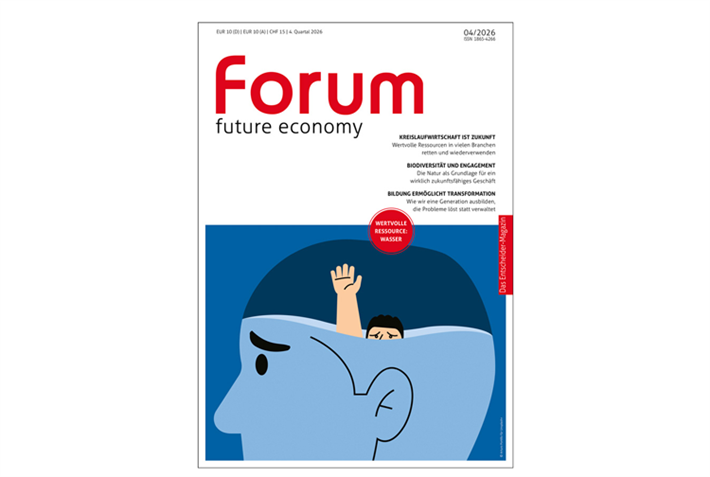
Die Natur lebt vom Kreislauf – und wir?
forum 04/2026
- Kreislaufwirtschaft
- Biodiversität
- Bildung
- Wasserweisheiten
- Altöl im Kreislauf
Kaufen...
Abonnieren...
12
SEP
2026
SEP
2026
22
SEP
2026
SEP
2026
23
NOV
2026
NOV
2026
Energie- & Umweltgipfel 2026: Produzierende Industrie
Where Industrial Transformation Creates Competitive Advantage
10623 Berlin
Where Industrial Transformation Creates Competitive Advantage
10623 Berlin

Anzeige

Der Mittelstand im ESG-Dschungel. Sie müssen nicht alles machen. Sie müssen nur wissen, was.
Sie erhalten einen klaren Fahrplan: was jetzt zu tun ist, was Sie auf dem Schirm behalten sollten und was Sie getrost ignorieren können.



Jetzt auf forum:
Ein Wochenende voller Musik, Kunst und Begegnung
EthioTrees ist das Leuchtturm-Projekt 2026