Gesellschaft | Politik, 30.08.2023
Reiche Länder zahlten weniger als fünf Prozent der benötigten klimabezogenen Hilfen für Ostafrika
African Climate Summit
Wirtschaftlich starke Nationen zahlten 2021 nur 2,4 Milliarden Dollar klimabezogene Gelder an Äthiopien, Kenia, Somalia und Südsudan - obwohl sie weitgehend für die Verschärfung der Klimakrise in Ostafrika verantwortlich sind. Die Summe steht im krassen Gegensatz zu den 53,3 Milliarden Dollar, die Ostafrika jährlich benötigt, um seine Klimaziele für 2030 zu erreichen. Das zeigt der heute veröffentlichte Oxfam-Bericht "Unfair Share".
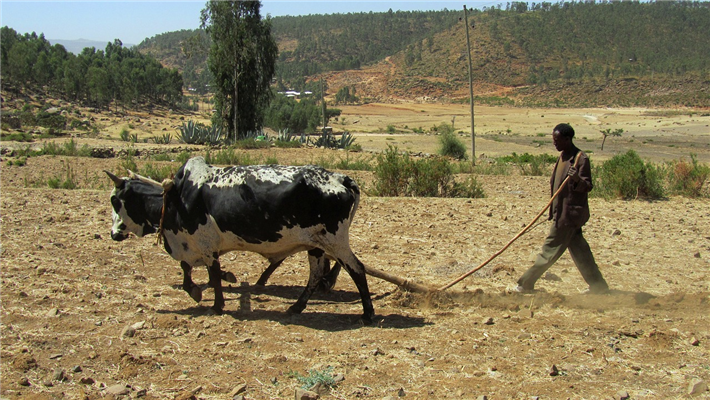 Die Direktorin von Oxfam in Afrika, Fati N'Zi-Hassane, sagt: "Selbst nach ihren eigenen Berechnungen haben die reichen Länder nur einen symbolischen Betrag gezahlt, um Ostafrika bei der Eindämmung der Klimakatastrophe zu unterstützen. Im Zentrum der ostafrikanischen Hungerkrise steht eine himmelschreiende Klimaungerechtigkeit: Reiche Umweltverschmutzer ignorieren die Milliarden, die sie Ostafrika schulden, während dort die Menschen aufgrund der Klimakatastrophe hungern müssen , sagte N'Zi-Hassane. Eine lang anhaltende Dürre und unregelmäßige Regenfälle haben in der Region Ostafrika fast 13 Millionen Tiere getötet und Millionen von Menschen ohne Einkommen und Nahrung zurückgelassen, über 40 Millionen Menschen in den vier Ländern leiden Hunger. Trotz des enormen humanitären Bedarfs haben die reichen Länder in diesem Jahr bisher nur etwa ein Drittel des UN-Hilfsaufrufs für Ostafrika in diesem Jahr erfüllt.
Die gesamte Pressemitteilung auf Englisch:
Rich nations paid less than 5 percent of the $53.3 billion East Africa needs to confront the climate crisis
Kenya, Ethiopia, Somalia and South Sudan have incurred $7.4bn of livestock losses alone as a result of climate change
Despite being largely responsible for the worsening climate crisis in East Africa, rich nations paid Ethiopia, Kenya, Somalia and South Sudan just $2.4 billion in climate-related development finance in 2021, in stark contrast to the $53.3 billion East Africa says it needs annually to meet its 2030 climate goals.
Oxfam’s "Unfair Share” Report published today, shows that the biggest polluting nations have fallen short of meeting both the climate and the humanitarian funds East African countries need to recover from their climate-fuelled hunger crisis. It highlights the impact of climate change on the future of the region. Oxfam in Africa Director, Fati N’Zi-Hassane said: "Even by their own generous accounts, polluting nations have delivered only pittance to help East Africa scale up their mitigation and adaptation efforts. Nearly half the funds (45%) they did give were loans, plunging the region further into more debt.”
A prolonged drought and erratic rainfalls have killed nearly 13 million animals, and decimated hundreds of thousands of hectares of crops, leaving millions of people without income or food. These four East African countries have incurred up to an estimated $30 billion of losses from 2021 to the end of 2023. Oxfam calculates that these countries also lost approximately $7.4 billion worth of livestock.
As a result, over 40 million people across the four countries are suffering severe hunger because of a two-year drought and years of flooding, compounded by displacement and conflict. Despite the soaring humanitarian need, rich nations have only met about one third of the UN appeal for East Africa this year. "At the heart of East Africa’s hunger crisis is an abhorrent climate injustice. Rich polluting nations continue to rig the system by disregarding the billions owed to East Africa, while millions of people are left to starve from repeated climate shocks,” said N’Zi-Hassane.
Industrialised economies have significantly contributed to the climate crisis, which now disproportionally affects regions like East Africa. The G7 countries and Russia alone have been responsible for 85 percent of global emissions since 1850. This is 850 times the emissions of Kenya, Ethiopia, Somalia and South Sudan combined. "Global financial institutions are also complicit in this climate-fuelled hunger crisis, as they drag developing countries into a spiral of debt, preventing them from fully recovering from consecutive shocks.” Extreme weather, now more severe and frequent, is the primary driver of hunger in Ethiopia, Kenya, Somalia and in part in South Sudan, where climate change has made the drought 100 times more likely. "These pummelling shocks have depleted people’s reserves, leaving those already vulnerable with nothing to fend for themselves. Since the last drought in 2017, the number of people who need urgent aid across the four countries has more than doubled - from 20.7 million to 43.5 million,” said N’Zi-Hassane.
The climate crisis has taken its toll especially on women and girls. Women in Somalia told Oxfam they now have to walk more than four hours every day to fetch water, often in treacherous journeys - a significantly increased distance compared to previous droughts. Too often, when food is scarce, mothers eat last and least; and girls are the first to be dropped out of school or married off at a young age so there is one less mouth to feed. Nimo Suleiman, a displaced mother of two from Somaliland, said "I have witnessed previous droughts but I have never seen anything like this before. The closest water point for us is five kilometers away, the road to the water point is not safe and very hot, but our family's survival depends on us making that journey.”
"At the first African Climate Summit, Oxfam urges African leaders to speak up and hold rich polluting nations to account for this climate crisis. Rich nations must immediately inject funds to meet the $8.74 billion UN humanitarian needs for East Africa in order to save lives now,” N’Zi-Hassane said.
"It is equally crucial for the biggest polluters to pay their fair share of the money East Africa needs to strengthen its efforts to help its most vulnerable citizens prepare for the next climatic shock. These funds must be sustainable, in the form of grants rather than loans.”
"Leading up to COP28, African voices must be loud in demanding rich polluting nations to drastically cut their emissions, and to compensate East Africa for all their climate loss and damage so that the region can recover from these worsening climate shocks.”
Kontakt: Oxfam Deutschland e.V., Annika Zieske | azieske@oxfam.de | www.oxfam.de


Die Natur lebt vom Kreislauf – und wir?
forum 04/2026
- Kreislaufwirtschaft
- Biodiversität
- Bildung
- Wasserweisheiten
- Altöl im Kreislauf
Kaufen...
Abonnieren...
12
SEP
2026
SEP
2026
22
SEP
2026
SEP
2026
23
NOV
2026
NOV
2026
Energie- & Umweltgipfel 2026: Produzierende Industrie
Where Industrial Transformation Creates Competitive Advantage
10623 Berlin
Where Industrial Transformation Creates Competitive Advantage
10623 Berlin


Anzeige

Der Mittelstand im ESG-Dschungel. Sie müssen nicht alles machen. Sie müssen nur wissen, was.
Sie erhalten einen klaren Fahrplan: was jetzt zu tun ist, was Sie auf dem Schirm behalten sollten und was Sie getrost ignorieren können.
Digitalisierung
 Macht KI dumm?
Christoph Quarch plädiert dafür, Sinnverstehen und Urteilskraft zu kultivieren als Gegengewicht gegen die drohende Übermacht der KI

Jetzt auf forum:
Ein Wochenende voller Musik, Kunst und Begegnung
EthioTrees ist das Leuchtturm-Projekt 2026