Umwelt | Klima, 19.11.2024
When less equals more: the incredible potential of efficiency
Second chronicle on COP29 from Bertand Piccard, founder of Solar Impulse Foundation
The second week of COP29 opens in Baku, with climate finance still at the centre of attention. But even today, the talk is mainly of compensation, of reparations from the countries of the North to the countries of the South, the main victims of climate change to which their frugal CO2 emissions have contributed almost nothing.

However, the multitude of clean and profitable solutions, as well as the cost of inaction, also allow us to see climate finance as a profitable investment, both in the North and the South. This is particularly the case for the energy transition, which lies at the heart of the new way in which our societies must operate if they are to be sustainable.
Transition to what? Of course, towards a model where fossil fuels are replaced (and as quickly as possible) by renewable energies. But let's look at the trends, both in terms of world population and socio-economic development. It would be illusory to think that the world of today, and even more so of tomorrow, can run on renewables alone, if we continue to waste two-thirds of the energy produced as we do at present.
This is where efficiency comes in.
The shameful wastefulness of our production and consumption patterns goes a long way towards explaining the environmental mess we find ourselves in. But in addition to the CO2 emitted, this situation also causes considerable financial losses: 4.6 trillion dollars annually!
The previous COP in Dubai began to put energy efficiency higher on the agenda of the climate debate, but there is still a long way to go before it becomes a reality, sector by sector, SME by SME, building by building. Because to achieve energy efficiency, the problem is not the supply of efficient solutions - because there are hundreds of them in every field - but the demand. Very often, these devices are more expensive to buy than their polluting equivalents, even though they are much more profitable in the long term.
"The shameful wastefulness of our production and consumption patterns goes a long way towards explaining the environmental mess we find ourselves in. But in addition to the CO2 emitted, this situation also causes considerable financial losses: 4.6 trillion dollars annually!"
Bertrand Piccard
So how can we make this offer more attractive? By changing the way solutions are marketed. Companies can move from selling products to selling results (kilometres travelled in electric buses instead of the buses themselves, light instead of bulbs, yield per hectare instead of tonnes of fertiliser). The end user pays for the service without buying the property, while the supplier retains the asset. This ‘servitisation’ model has great potential for accelerating the deployment of efficient solutions which, despite a high initial cost, offer a lower total cost of ownership thanks to reduced operating expenses.
What are the benefits of this paradigm shift? For the adopter, it's a major incentive, because the initial investment disappears. For the solution provider, the interest is no longer in selling the greatest quantity of products, but the best possible quality. The more reliable the product, the higher the profit margin. This is the end of programmed obsolescence!
This model represents a new form of economy, which I call the ‘qualitative economy’. To develop, it requires the arrival of a third player capable of taking on the initial investment.
This is the purpose of the Energy Efficiency Initiative launched in Baku by the Solar Impulse Foundation, the European Investment Bank and the European Commission. By combining public investment, guarantees and private capital, it will strengthen the deployment of efficient solutions for SMEs, particularly through servitisation.
Innovation is not just technological; it must also be financial. This will enable climate action to unite all the players by proving its economic profitability.
About the Solar Impulse Foundation and Bertrand Piccard
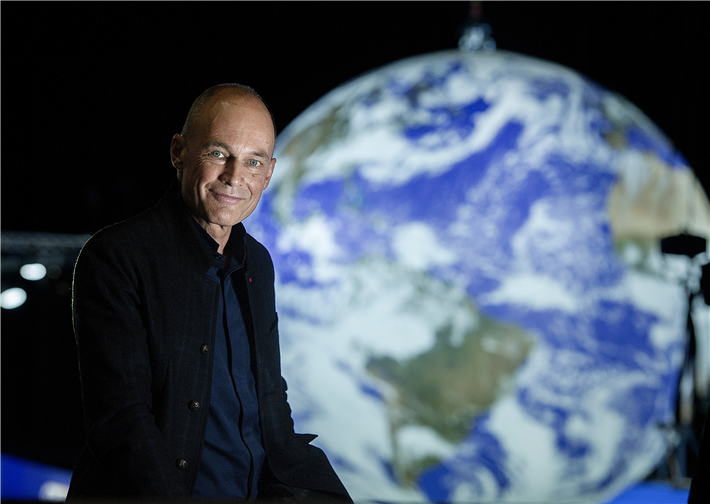 To address sustainability challenges while enabling economic growth, Bertrand Piccard and the Solar Impulse Foundation have identified 1000+ clean and profitable solutions. The Solar Impulse Foundation has organized these solutions into a search-engine for climate action - the Solutions Explorer - in order to support their implementation at scale. By giving political and economic decision-makers the tools to adopt much more ambitious energy and environmental policies, the Foundation will help them to set a roadmap to reach their environmental objectives.
Bertrand dedicates his life to demonstrate the opportunities lying in sustainable development and to raise interest in profitable solutions to protect the environment. He is a pioneer of new ways of thinking that reconcile ecology and economy, and uses his exploration feats to motivate governments and industries to take action. Bertrand has always advocated that solving climate change - rather than an expensive problem - is a fantastic market opportunity. He actively speaks out against the absurdity of the outdated and polluting devices and systems we are still using and promotes the benefits of existing efficient technologies to motivate governments and industries to take action.
Kontakt: Solar Impulse Foundation, Daniela Diego | daniela.diego@solarimpulse.com | solarimpulse.com


Die Natur lebt vom Kreislauf – und wir?
forum 04/2026
- Kreislaufwirtschaft
- Biodiversität
- Bildung
- Wasserweisheiten
- Altöl im Kreislauf
Kaufen...
Abonnieren...
16
SEP
2026
SEP
2026
08
OKT
2026
OKT
2026
forumESGready - Fortsetzung unserer beliebten Online-Events ab 8. Oktober
Transformation im Mittelstand: Aktuelle relevante Themen in drei Terminen
Online
Transformation im Mittelstand: Aktuelle relevante Themen in drei Terminen
Online
23
NOV
2026
NOV
2026
European Sustainability Week
Built on Trust. Driven by Insight. Focused on Impact. - Ticketrabatt für forum-Leser*innen
53639 Königswinter
Built on Trust. Driven by Insight. Focused on Impact. - Ticketrabatt für forum-Leser*innen
53639 Königswinter

Anzeige
Der Mittelstand im ESG-Dschungel. Sie müssen nicht alles machen. Sie müssen nur wissen, was.
Sie erhalten einen klaren Fahrplan: was jetzt zu tun ist, was Sie auf dem Schirm behalten sollten und was Sie getrost ignorieren können.
Sport & Freizeit, Reisen
 Hinaus in die Wildnis!
Christoph Quarchs Blick auf die junge Kulturgeschichte von Naturschutz und Naturtourismus

Jetzt auf forum:
LEEF wird fürs Nachhaltigkeitsmanagement ausgezeichnet
Konkrete Gefahren für Betriebe
Nachhaltigkeit beginnt mit gutem Design
Bereits über 70 Veranstaltungen für Munich Climate Week 2026 angekündigt
Bessere Verpackungen, weniger Müll
Bundespreis Ecodesign: Ausstellung, 19.-22. September & Vernissage, 18. September 2026, Berlin