Umwelt | Klima, 17.11.2024
Land and Ocean Unite for Climate Action at COP29
NOW Partners team is back on site for forum on COP29 in BAKU
At COP29 in Baku, land and ocean advocates united to highlight natural carbon sinks' vital role in climate action. Experts called for collaboration to integrate these solutions into future policies. A report from Merijn Dols, partner of forum.
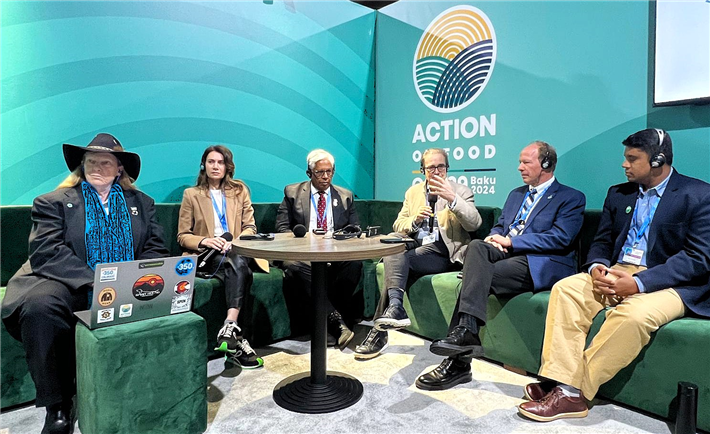
COP29 in Baku saw a groundbreaking agreement to bring focus to the critical importance of land and ocean carbon sinks. At the first-ever Ocean and Land Sequestration Dialogue, Dr Kilaparti Ramakrishna (Rama) of Woods Hole Oceanographic Institution highlighted the historical undervaluation of these natural solutions in climate negotiations. He stressed the urgent need to integrate these in climate dialogues, drawing parallels with the challenges faced by land-use advocates. Dr. Ramakrishna also emphasized the interconnectedness of climate and biodiversity, urging attendees to embrace collaboration. This event was held at the Baku Carpet Museum, highlighting the importance of integration with local culture and the arts.
In the BlueZone, WHOI and the Future Economy Forum (FEF) co-hosted a landmark dialogue, in which WHOI's President, Peter de Menocal, explored the immense carbon storage capacity of the deep ocean but cautioned against rushing into large-scale ocean engineering projects without fully understanding the consequences.
Hunter Lovins from NOW Partners Foundation and Natural Capitalism Solutions, a renowned environmentalist, added the importance of focusing also on the power of grasslands to remove atmospheric CO2, highlighting their historical role that decarbonised the planet from 1,000 parts per million to the safe level of 280 ppm that existed when humans evolved. `using regenerative agriculture and holistic grazing, we can over 100 years reduce carbon levels back to safe levels of 300 ppm.
De Menocal echoed this sentiment, pointing to the oceans' role in storing vast amounts of carbon during the last ice age. FEF co-founder, Laura Santucci, emphasized the importance of strategic alliances to ensure land and ocean concerns are embedded in climate policy.
The dialogue concluded with a call to action by FEF's Walter Link and Dr. Ramakrishna, who pledged to strengthen this partnership and ensure land and ocean sequestration remain central to future climate negotiations.
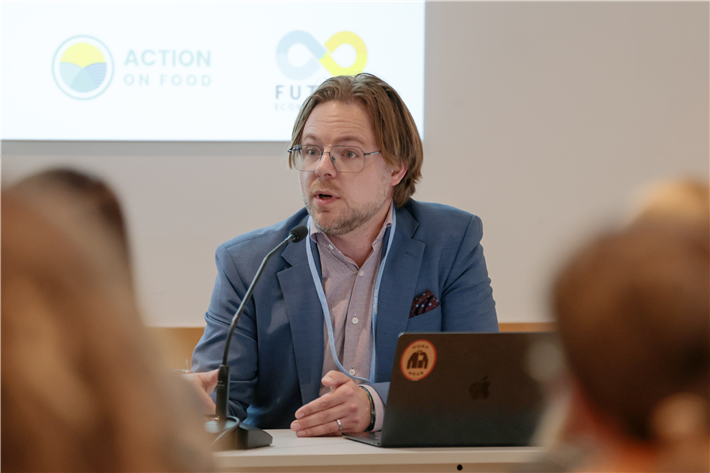 These dialogues at COP29 ignite a spark of hope, demonstrating the power of collaboration and natural solutions in addressing the climate crisis. This momentum must be sustained as the world moves towards COP30.
Merijn Dols: Managing Partner, NOW. Former Head of Open Innovation and Circularity at Danone. Advisory board member, Ellen MacArthur Foundation and Future Food Institute. Regenerative Economy Fellow at Natural Capitalism Solutions. Facilitates the paradigmatic shift to a regenerative future that reconnects Economy and Ecology. Circular Economy scholar and lecturer.
Kontakt: Merijn Dols, NOW Partners Foundation & Future Economy Forum | merijn@now.partners | www.now.partners, www.merijndols.com
Quelle: NOW Partners Foundation


Frau Reiche – es reicht!
forum 03/2026
- Resilienz
- Klimafinanzierung
- Wald
- Startups
Kaufen...
Abonnieren...
28
AUG
2026
AUG
2026
Neues Amt Altona - Eröffnungswochenende mit naa-Festival
Erster genossenschaftlich organisierter Co-Working-Neubau Hamburgs
22767 Hamburg
Erster genossenschaftlich organisierter Co-Working-Neubau Hamburgs
22767 Hamburg
23
SEP
2026
SEP
2026
06
OKT
2026
OKT
2026
Zertifizierter ESG Reporting Professional
Fit für CSRD, ESRS & Co. – ESG-Reporting souverän meistern
Online-Lehrgang in vier Modulen
Fit für CSRD, ESRS & Co. – ESG-Reporting souverän meistern
Online-Lehrgang in vier Modulen


Anzeige

Der Mittelstand im ESG-Dschungel. Sie müssen nicht alles machen. Sie müssen nur wissen, was.
Sie erhalten einen klaren Fahrplan: was jetzt zu tun ist, was Sie auf dem Schirm behalten sollten und was Sie getrost ignorieren können.


Jetzt auf forum:
Klimarisiken sind Geschäftsrisiken
Ist die Demokratie im KI-Zeitalter noch zu retten?
Erneut Milliarden-Steuergeschenke für Großerben - Erbschaftsteuer muss endlich gerecht werden
Ab Oktober: Zirkuläres Wirtschaften und Sustainability Reporting & Accounting
Leistung mit gutem Gewissen: Was nachhaltige Supplements leisten können
Klimarisiken sind Geschäftsrisiken
Bio-Verbände gründen Dürre-Taskforce
Es ist die Dürre, mit der wir umgehen müssen. Wir brauchen Ernährungslandschaften