Wirtschaft | Recht & Normen, 09.03.2018
Neue Version der ISO 14024 für Umweltkennzeichnungen und -deklarationen veröffentlicht
Neben Konsumprodukten nun auch Dienstleistungen wie etwa Hotels mit aufgenommen
Konsumenten haben ein großes Interesse daran, was sie einkaufen. Umweltkennzeichnungen und -deklarationen können ihnen dabei helfen all jene Produkte oder Dienstleistungen zu identifizieren, die unter Umweltgesichtspunkten vorzuziehen sind.

Lesen Sie nachfolgend den vollständigen Beitrag im englischsprachigen Original:
New version of ISO 14024 on ecolabelling just published
Consumers have high concerns about what they buy and environmental labels and declarations can help them identify those products or services proven "environmentally preferable”. But the world’s environmental context has changed dramatically since 1999 when ISO 14024 laid down the first international requirements for ecolabelling – a change that is mirrored by heightened consumer demands. A new updated version of the standard will help meet these expectations.
Ecolabelling found its origins in the growing global concern for environmental protection by government, business and the general public. As companies have come to recognize that environmental concerns may be translated into a market advantage for certain products and services, various environmental declarations, claims and labels have emerged, such as natural, recyclable, eco-friendly, low-energy, recycled content, and so forth. These have exerted a powerful attraction on consumers looking for ways to reduce environmental impacts through their purchasing choices, but they have also led to some confusion and scepticism. Hence why a new version of ISO 14024, Environmental labels and declarations – Type I environmental labelling – Principles and procedures, was needed to help make sense of it all.
Björn-Erik Lönn, Convenor of the working group that revised the standard, explains: "During the past 20 years, the use of ecolabels Type I has increased and the concept is now spreading to more countries and markets in the form of new initiatives impelled by UN Environment and other organizations. The result is a definite win-win-win: a credible ecolabel Type I for consumers, producers and the environment alike. These ecolabels used to cover mostly consumer goods, but now a wide range of services, from hotels to cleaning companies, can be "ecolabelled” based on third-party verification of public environmental requirements determined according to life-cycle considerations of the product.”
ISO 14024:2018 refers to Type I environmental labelling programmes, which are voluntary and can be operated by public or private agencies at the national, regional or international level. It establishes the principles and procedures for developing Type I environmental labelling programmes, including the selection of product categories, product environmental criteria and product function characteristics, and for assessing and demonstrating compliance. It also establishes the certification procedures for awarding the label.
"This latest revision aims to strengthen the guidelines for facts and documentation used for ecolabelling and defining the competence of verifiers, putting them in line with requirements for other types of environmental labels mentioned in the guidelines of ISO 14020,” says Lönn. "The core principles and descriptions of the original 1999 version have been kept unchanged as they fully describe the work that Type I ecolabels so successfully do all over the world.”
ISO 14024 sets a rigorous framework and well-functioning guide for Type I ecolabels and the new 2018 version supports the strong position these ecolabels hold in different markets and for a huge variety of products. The objective is to secure transparency and credibility when implementing Type I environmental labelling programmes and to harmonize the principles and procedures applicable to these programmes. In the end, "it’s all about having correct and highly trustworthy environmental information in the marketplace,” says Lönn.
ISO 14024:2018 was developed by technical committee ISO/TC 207, Environmental management, subcommittee SC 3, Environmental labelling, whose secretariat is held by SA, ISO’s member for Australia. It can be purchased from your national ISO member or through the ISO Store.
What is a Type I environmental labelling programme?
A Type I label is a third-party assessment of a product based on a number of criteria involved in the environmental impact of a product or material throughout its life cycle. The objective of this type of environmental labelling programme is to contribute to a reduction in the environmental impacts associated with products, through the identification of products that meet the specific criteria of a Type I programme for overall environmental preferability.
Read more here.


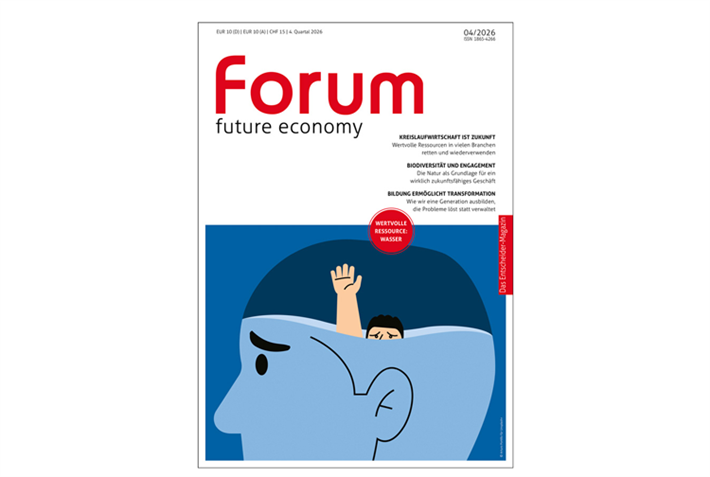
Die Natur lebt vom Kreislauf – und wir?
forum 04/2026
- Kreislaufwirtschaft
- Biodiversität
- Bildung
- Wasserweisheiten
- Altöl im Kreislauf
Kaufen...
Abonnieren...
08
OKT
2026
OKT
2026
forumESGready - Fortsetzung unserer beliebten Online-Events ab 8. Oktober
Transformation im Mittelstand: Aktuelle relevante Themen in drei Terminen
Online
Transformation im Mittelstand: Aktuelle relevante Themen in drei Terminen
Online
20
OKT
2026
OKT
2026
Personalmesse München powered by Zukunft Personal
Die Messe für Recruiting, Personalmanagement, BGM und Weiterbildung
80939 München
Die Messe für Recruiting, Personalmanagement, BGM und Weiterbildung
80939 München
23
NOV
2026
NOV
2026
European Sustainability Week
Built on Trust. Driven by Insight. Focused on Impact. - Ticketrabatt für forum-Leser*innen
53639 Königswinter
Built on Trust. Driven by Insight. Focused on Impact. - Ticketrabatt für forum-Leser*innen
53639 Königswinter

Anzeige
Der Mittelstand im ESG-Dschungel. Sie müssen nicht alles machen. Sie müssen nur wissen, was.
Sie erhalten einen klaren Fahrplan: was jetzt zu tun ist, was Sie auf dem Schirm behalten sollten und was Sie getrost ignorieren können.
Digitalisierung
 Sind wir auf dem Weg, uns selbst abzuschaffen?
Christoph Quarch überlegt, was KI-Systeme mit uns machen und wie wir uns verhalten sollten
Jetzt auf forum:
Es brennt! Doch kaum regnet es, ist alles vergessen …
Wie smarte Technologie Würde und Sicherheit im Alter sichert
LEEF wird fürs Nachhaltigkeitsmanagement ausgezeichnet
Konkrete Gefahren für Betriebe
Nachhaltigkeit beginnt mit gutem Design
Bereits über 70 Veranstaltungen für Munich Climate Week 2026 angekündigt